Opening the blinds can reduce the time you need electric lights, but that does not translate into a predictable dollar saving. Lighting may be only one part of your bill, and direct sun can increase cooling needs in some rooms. A sensible approach is to identify when daylight actually replaces a light and keep the room comfortable.
Find hours when daylight is useful
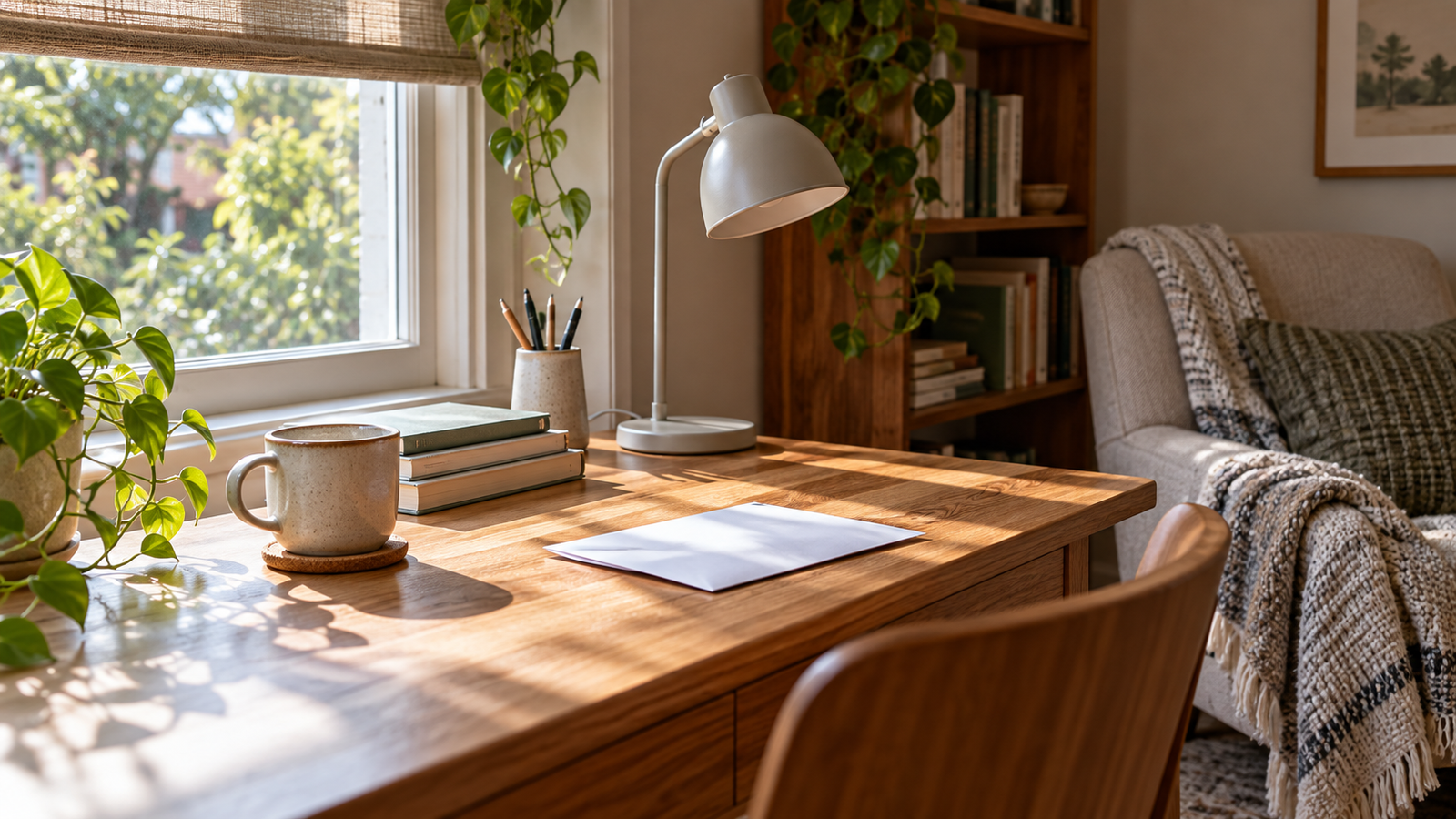
Notice which rooms are occupied during the day and which lights are on. In a workspace, move the task closer to a window if it remains comfortable and glare-free. Use an adjustable shade when sun hits a screen or countertop. Avoid assuming that a dark hallway can be lit adequately from another room.
If the room is empty, turning off the light matters more than adding a daylight gadget. An appropriate switch, timer, or occupancy sensor may help with lights left on, but the bulb and fixture must be compatible.
Account for heat and seasons
A sunny window may offer useful winter warmth in some climates but unwanted summer heat in others. Shades, blinds, and exterior shading change the balance. Compare the room's comfort and cooling use before replacing windows or installing new controls. Window products should be selected for the local climate and their documented performance, not solely for how bright they look.
Read the bill with care
Check kilowatt-hours, billing days, rate structure, and other charges. To estimate an individual lamp's electricity use, use its rated watts and the hours it operates; actual cost then depends on your rate. Compare periods with similar weather and occupancy if you change lighting habits. A total electric bill alone cannot isolate the effect of daylight from air conditioning or other appliances.
Efficient LED bulbs remain useful at night and on cloudy days. Choose brightness and fixture fit first, then consider whether a dedicated task lamp reduces the need for broader room lighting. See our guide to choosing LED bulbs for more detail.
A low-cost trial
For a week, note when an occupied room can use comfortable daylight and switch off electric lighting at those times. Keep shades adjusted for glare and heat. Track the habit rather than claiming a measured saving without an appropriate comparison. If the change works, decide whether better shades or controls are worth the cost.
Further reading
U.S. Department of Energy daylighting overview, U.S. Department of Energy window and shade guidance.