New home technology is useful when it fixes a specific problem. A connected device alone cannot guarantee lower energy use. Start with your home’s equipment and routines, then compare the simplest change that could improve comfort or reduce waste.
Lighting that matches the room
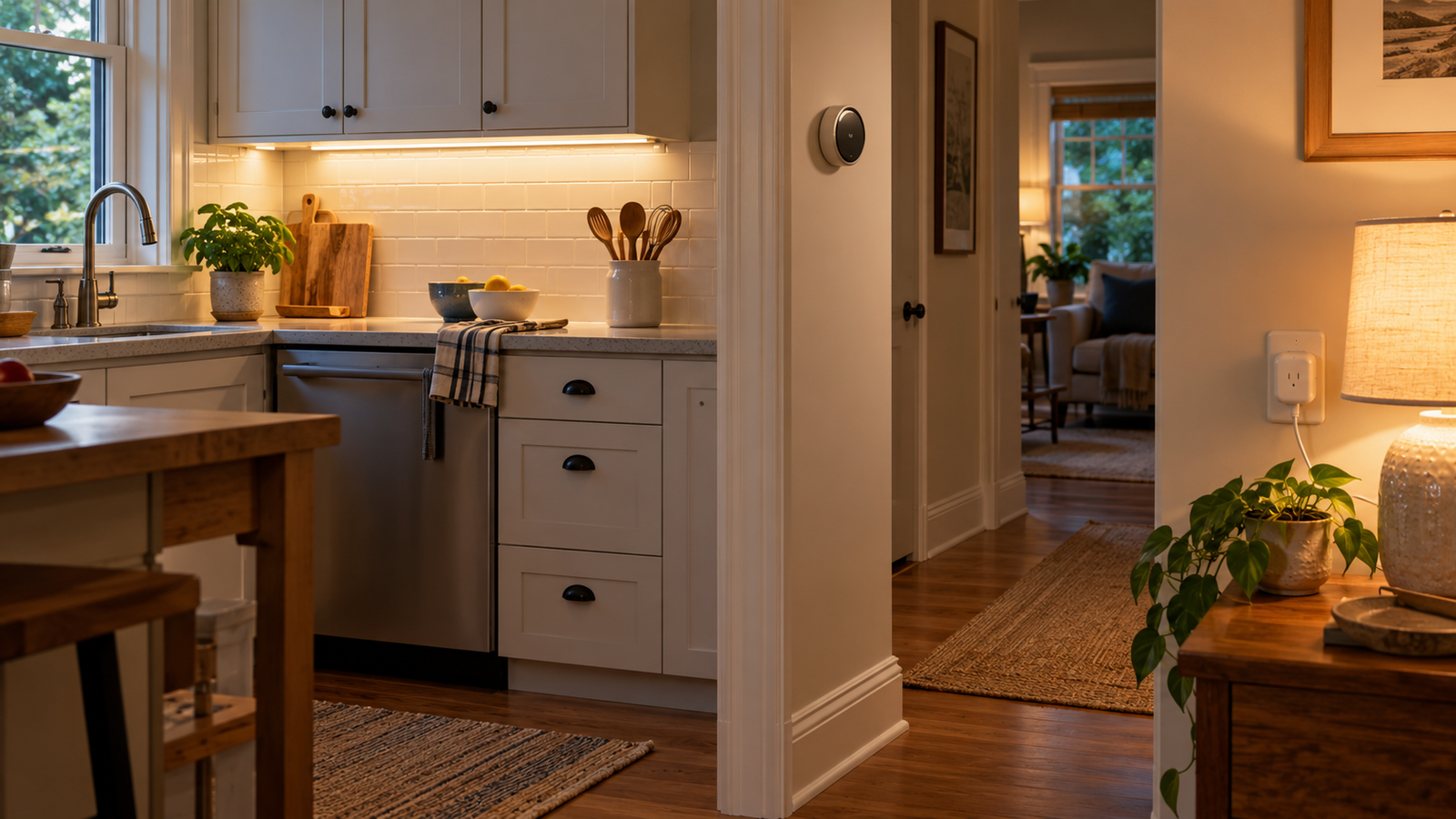
Efficient LEDs can provide the brightness and color a room needs with less electricity than older lamp technologies. Compare lumens, base, fixture restrictions, and dimmer compatibility. A timer or occupancy sensor can be useful where a light regularly stays on in an empty room. A smart bulb makes sense when its controls solve a real routine, not because it has more features.
Heating and cooling controls
A programmable or smart thermostat can help manage a compatible system's schedule. Before purchase, identify the heating and cooling equipment, wiring, and the household's needs. Check the manufacturer's compatibility tool. ENERGY STAR-certified smart thermostats meet a defined energy performance approach, but an individual home's result varies with climate and prior settings.
A thermostat cannot repair leaky ducts, poor insulation, or a failing HVAC system. If comfort problems persist, a professional assessment may be more valuable than another connected control.
Know what a plug monitor can and cannot do
A plug-in monitor can help observe a suitable device's electricity use. A smart plug can also schedule a compatible load. Check electrical ratings and instructions, and do not automatically cut power to appliances that require continuous operation. Monitoring creates a useful answer only if it leads to a change in behavior or equipment choice.
Larger upgrades need a scope
Heat pumps, insulation, and solar can require more investment and professional work. Review the building's condition and local climate first. Compare written proposals, installation requirements, warranties, and service access. Current incentives, utility rules, and product certification should be checked for your location before any purchase decision.
Keep a short record of what you changed and how the household uses the new equipment. Compare energy use under similar conditions rather than attributing every bill change to one gadget.
Further reading
ENERGY STAR smart home tips, U.S. Department of Energy LED basics, U.S. Department of Energy home energy assessments.