Insulation can make a home more comfortable in both winter and summer, but the best choice depends on where the home is losing heat, its climate, and the condition of the building. A material described as “green” is not automatically the right fit. Start with the area to improve, the required thermal performance, and the way the material will be installed.
Start with an assessment, not a product
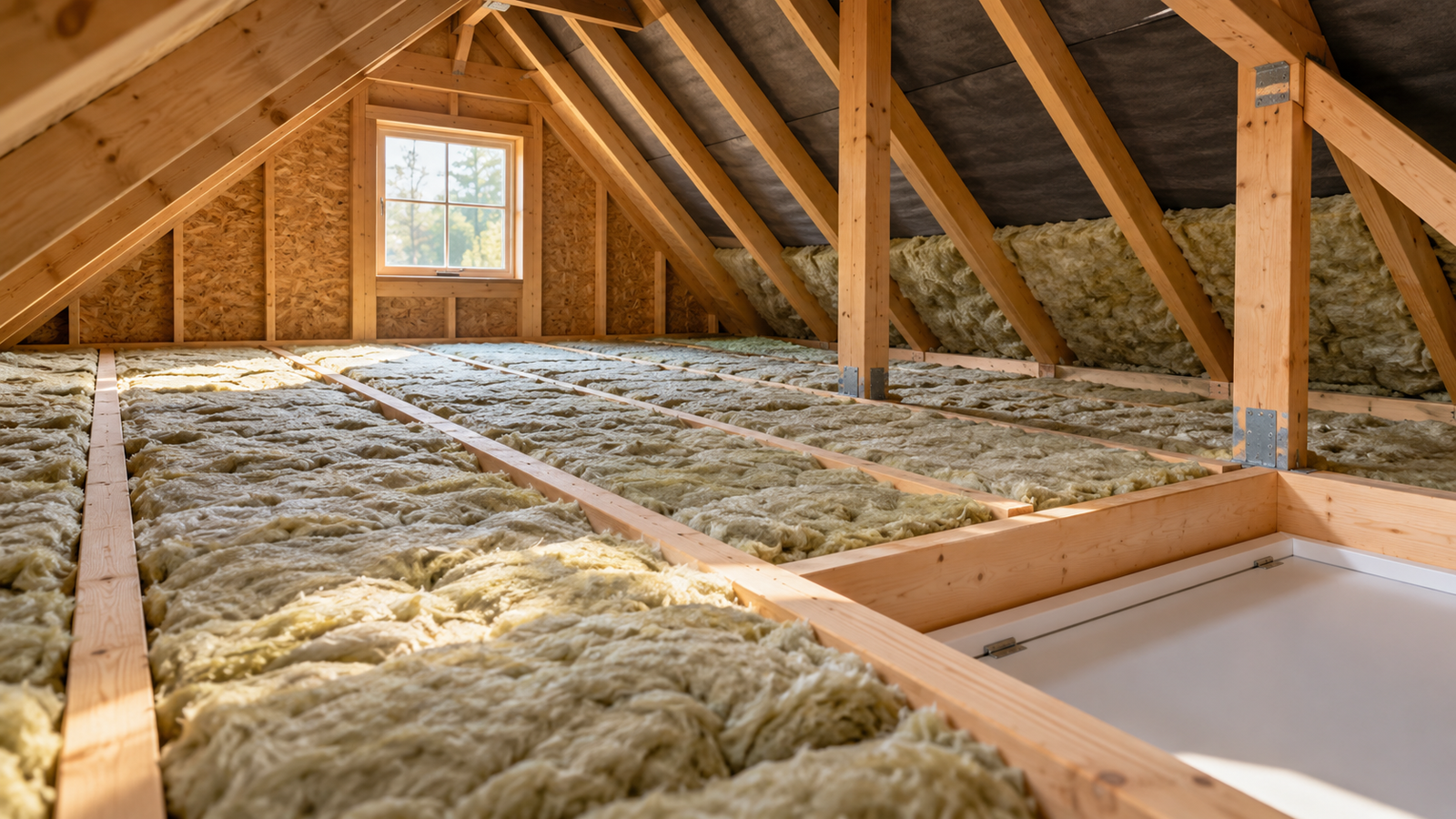
Look at the attic, crawl space, basement rim joists, and other accessible areas. Check for existing insulation and signs of air leaks or moisture. An energy assessment can help identify which improvements matter most for your house. In an attic, air leaks should generally be addressed before adding insulation, while ventilation paths must remain open.
Do not cover a moisture problem with new insulation. Water intrusion, condensation, and damaged materials need to be identified and corrected first. Follow local building requirements and get professional advice when electrical, ventilation, or structural conditions are uncertain.
Understand R-value and climate
R-value describes resistance to heat flow. The useful target depends on the part of the house and the local climate, as well as what insulation is already present. ENERGY STAR publishes recommended levels by climate zone and location in the home. More material is not automatically a better project if air leaks or moisture remain unresolved.
Compare products by the R-value provided at the installed thickness, the space available, and the manufacturer’s instructions. Installation quality affects actual performance. Gaps, compression, and blocked vents can undermine a well-specified material.
Compare materials on performance and impact
Cellulose, fiberglass, mineral wool, cotton-based products, cork, and other options can differ in recycled content, application, cost, availability, and installation requirements. The environmental choice is more than a material name: consider documented recycled content, durability, suitable use in the assembly, and how much heating and cooling the finished project may avoid.
For example, some cellulose insulation is made with recovered paper, but its exact content and treatment vary by product. A natural origin does not by itself prove fire resistance, moisture suitability, or a lower overall impact. Check the product’s documentation and applicable code requirements instead of relying on a broad “eco-friendly” label.
Choose the right project scope
- Small air leaks: Appropriate weatherstripping or caulk may address specific gaps, following the product instructions and avoiding areas that require ventilation.
- Accessible attic work: Check existing insulation, seal attic-floor leaks, preserve ventilation, and select the appropriate insulation level for the climate.
- Walls or complex spaces: Installation may require a contractor who can assess the wall assembly, moisture conditions, and local code.
- Uncertain conditions: A professional assessment is preferable to buying material before the problem is understood.
No single percentage savings applies to every home. Results depend on its starting condition, climate, equipment, fuel prices, and the work performed. Treat any savings estimate as a scenario to verify, not as a guarantee.
A practical buying checklist
- Which part of the home is being improved, and what is its current condition?
- What R-value is appropriate for the location and climate?
- Does the product’s documentation support its recycled-content or environmental claims?
- What installation, fire-safety, moisture, and ventilation requirements apply?
- Can the product be installed correctly by the homeowner, or is a contractor needed?
Only after these questions are answered should you compare specific insulation products, air-sealing supplies, and installation services. This keeps the purchase connected to a real improvement in the home.
Further reading
See the U.S. Department of Energy guide to insulation, ENERGY STAR’s recommended R-values, and ENERGY STAR’s attic guidance for location-specific details.