Wood furniture can serve a home for many years, but the phrase reforested wood does not tell you enough about a particular table or shelf. Ask what material is used, where the claim applies, and how the piece is built and maintained. A durable, repairable item is a different decision from buying a vague green label.
Read the product description carefully
Find out whether the piece uses solid wood, veneer, plywood, MDF, or a mix. Each construction method has different repair and moisture considerations. Ask which parts carry a certified sourcing or recycled-content claim. A brand's general commitment does not mean every item in its range has the same certification.
If a seller cites FSC or another certification, check the actual product label, certificate scope, and seller documentation. Avoid treating an unverified logo in an advertisement as proof of the exact table's origin.
Inspect how it is built
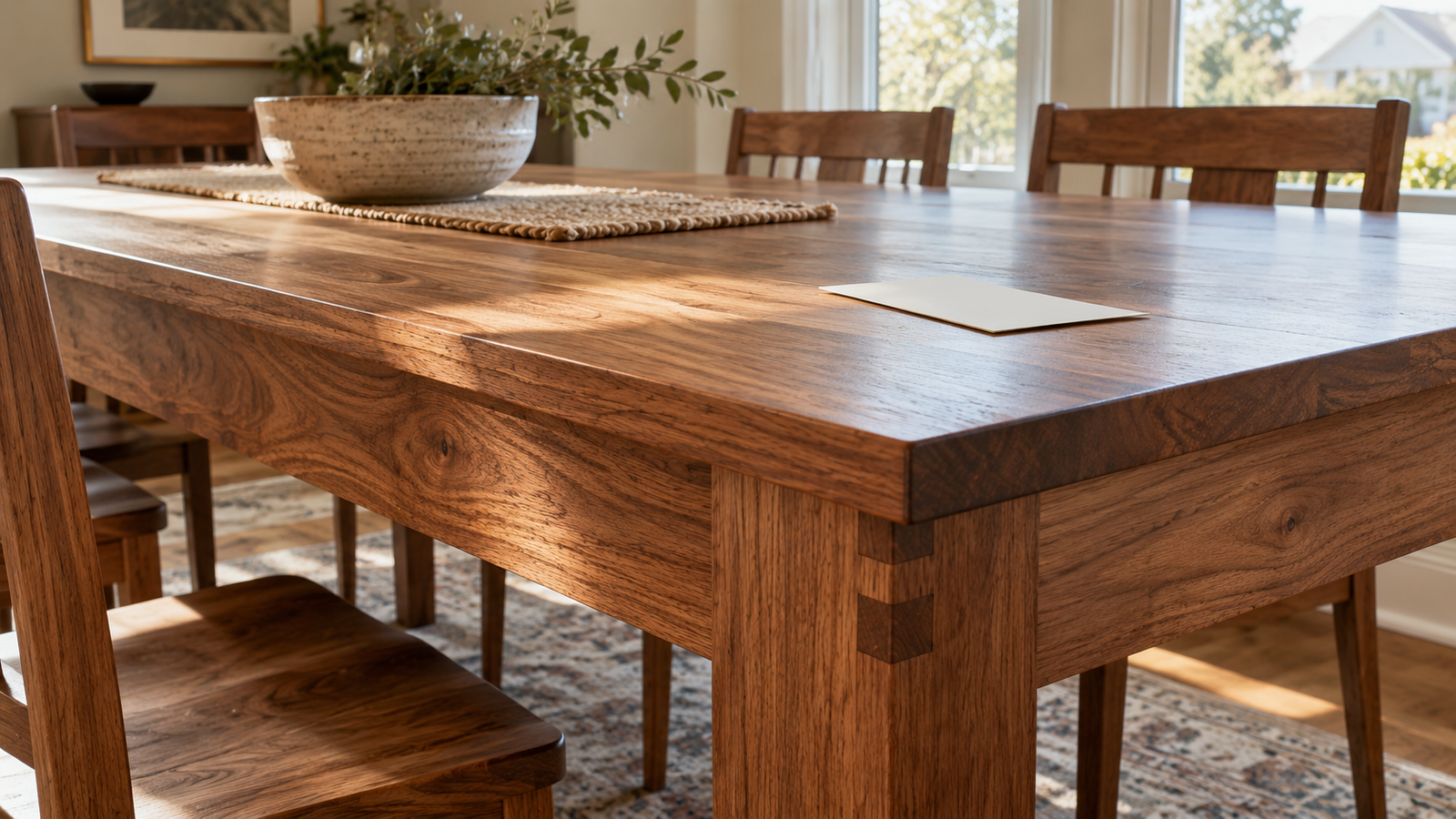
Check joints, support, surface finish, drawers and hardware. Can the tabletop be refinished or repaired? Are replacement parts available? A used solid piece with a sound frame may need only maintenance. A new item should fit the room and expected load without wobble or unsafe overhang.
Consider indoor use
For composite wood, ask for applicable emissions information and follow manufacturer guidance. Finish and adhesive information may be relevant to the household. New furniture is only one potential source of indoor pollutants; if you have a specific air-quality concern, address sources and ventilation rather than assuming any natural wood item is automatically harmless.
Compare total usefulness
Measure the room and access path, then compare warranty, care requirements, repairability and documented sourcing. A table that can be maintained over time may be more useful than frequent replacements. Do not invent a carbon saving or rank materials without a product-specific assessment.
Further reading
Forest Stewardship Council furniture information, U.S. EPA composite wood consumer questions, U.S. FTC green claim guidance.