A worn table or chair may need only a tightened joint or a careful cleaning. Another piece may have damage that makes reuse impractical. Before sanding, painting or buying supplies, decide whether the structure is sound and what problem you actually need to solve.
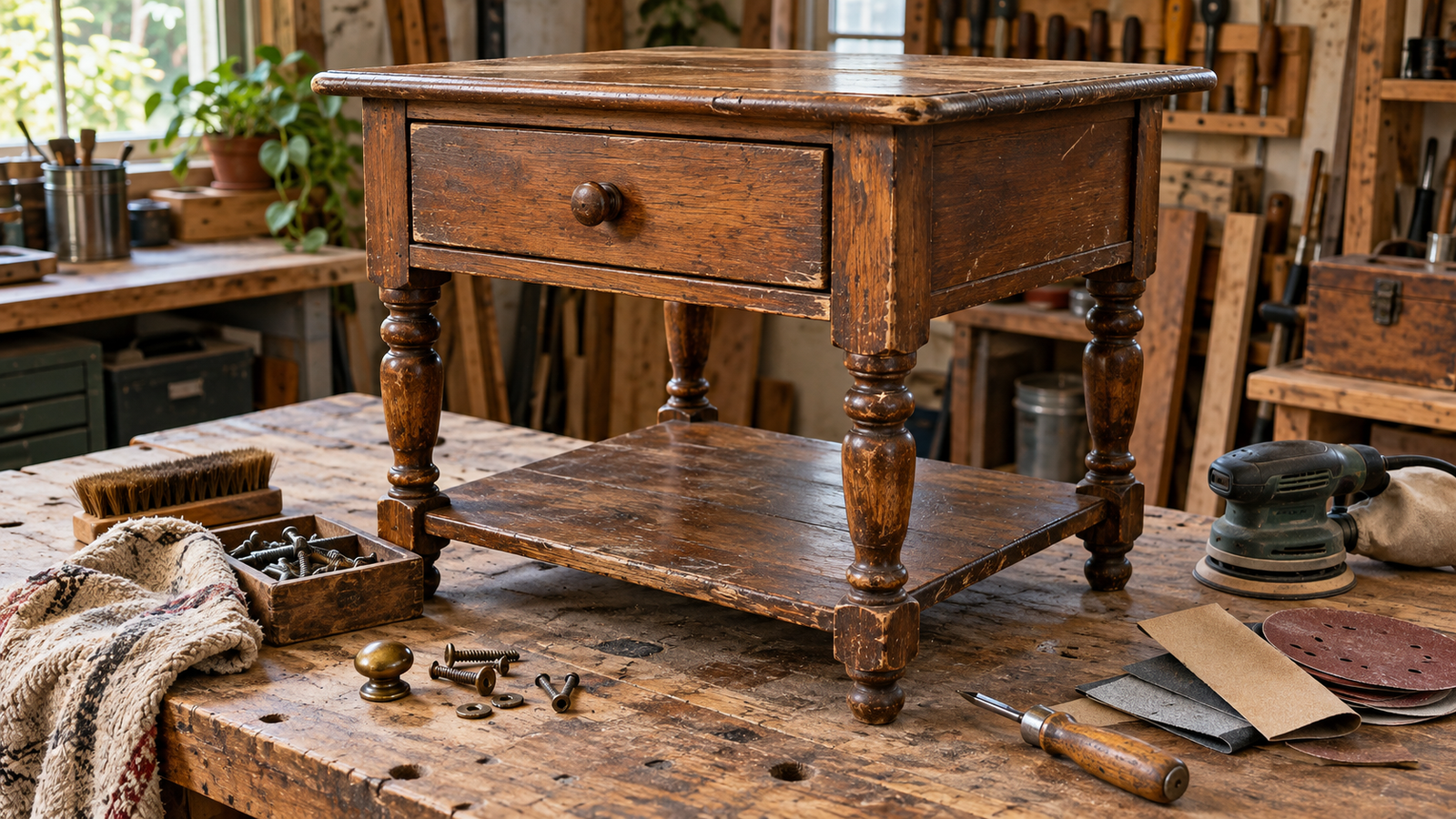
Inspect structure first
Check legs, joints, fasteners, drawers and load-bearing parts. A loose handle is a different job from a cracked chair frame. Do not use an unstable seat until repaired and assessed for its intended load. Check tall storage for tip-over risk and appropriate anchoring.
Identify surface and finish risks
Clean according to the material before using abrasives. Old paint can contain lead; an unknown coating should not be sanded casually. Veneer can be damaged by aggressive sanding, and water damage may extend beneath the surface. If mold, contamination or structural decay is present, get suitable professional advice.
Choose the smallest useful repair
A replacement knob, compatible glide, tightened fastener or professional upholstery repair may extend use. Follow the maker's directions where available and choose adhesives and finishes for the material and environment. Work in an appropriately ventilated area and follow product safety instructions.
Compare the repair quote with the cost and quality of a suitable replacement, including transport and disposal. The decision can depend on sentimental value and the ability to find a skilled repairer, not just the purchase price.
Reuse responsibly
If you cannot use a sound piece, consider resale or donation according to local acceptance rules. If it is unsafe or contaminated, do not pass the hazard to someone else. A repair can reduce waste when the item continues to serve; avoid claiming an exact environmental saving without a product-specific assessment.
Further reading
U.S. EPA on reuse and repair, U.S. CPSC furniture tip-over guidance, U.S. EPA lead-safe renovation program.