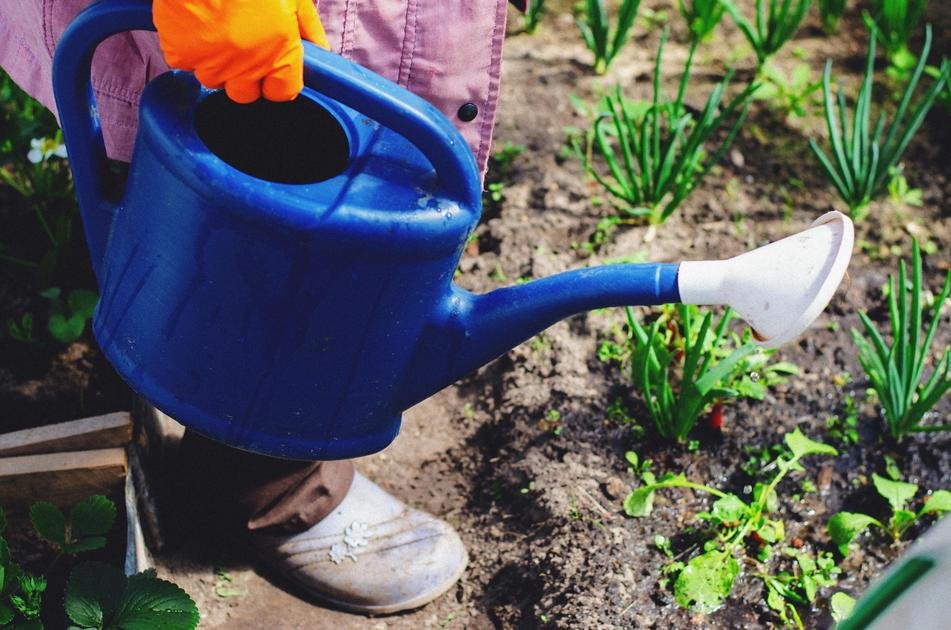
A sustainable yard starts with the conditions of its site, not a universal list of plants. Soil, drainage, sun, rainfall, local habitat, and the household's time all matter. The goal is to create a landscape that works with those conditions and can be maintained for years.
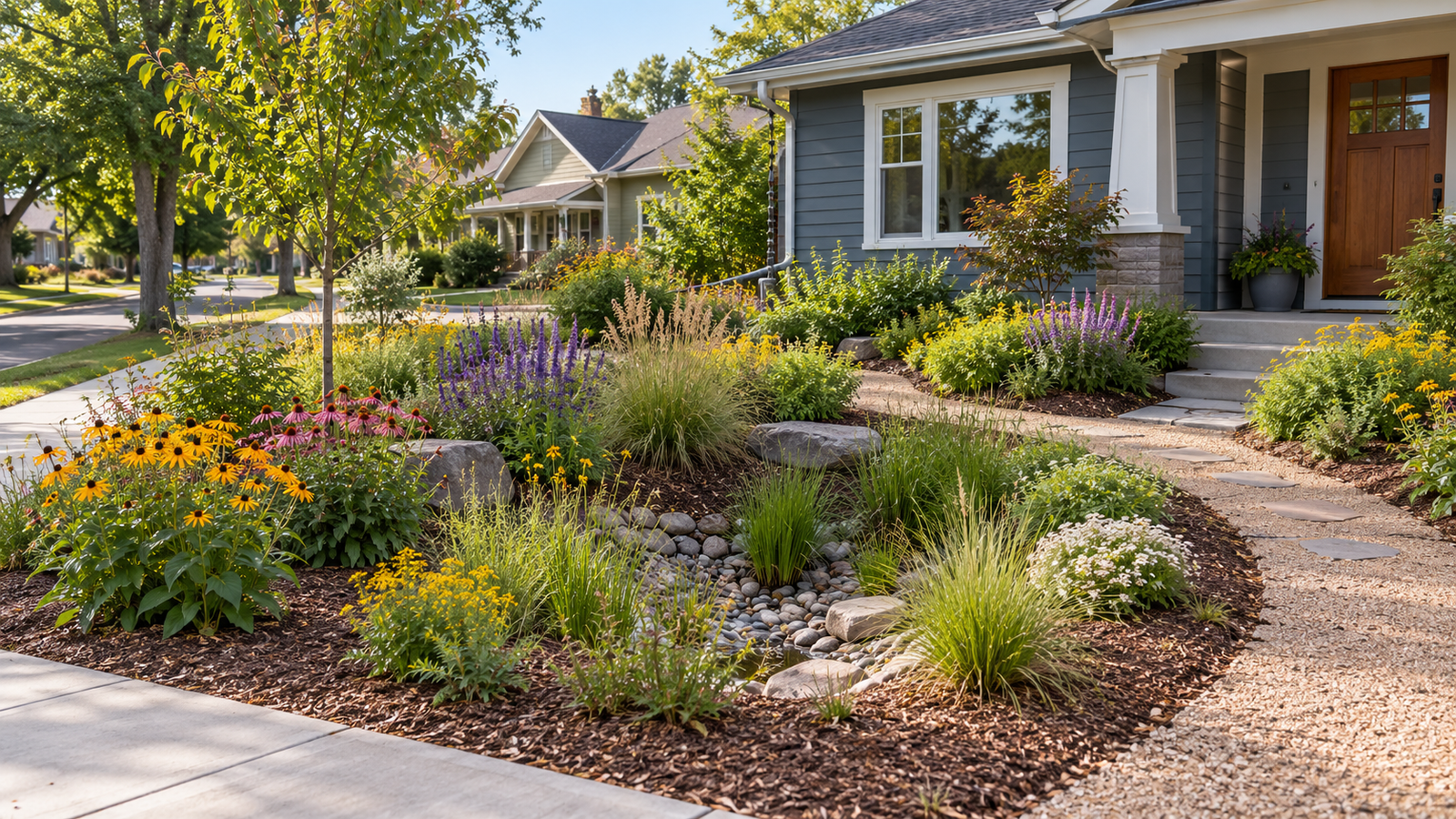
Map the site before planting
Note sunny and shaded areas, slopes, places that stay wet, and how water flows after rain. Check local rules, underground utilities before digging, and the mature size of trees and shrubs. A plant that thrives in one US region may perform poorly or spread aggressively in another. Use your state or local extension service for species and soil guidance.
Choose plants for local conditions
Regionally appropriate native plants can support local wildlife and often fit the local climate, but they still need the right light and soil. Group plants with similar water needs. Mix sizes and bloom periods where appropriate, and leave room for growth. Avoid claiming every native plant needs no irrigation or care after planting.
Use water and materials thoughtfully
Improve soil according to a test when possible, and use suitable mulch to moderate moisture and weeds while keeping it away from stems and trunks. Water new plantings as needed to establish them, then adjust to weather and species. Repair irrigation leaks and direct water to roots. A rain garden or drainage project needs site-specific soil and runoff assessment; do not place one against a foundation by guesswork.
Maintain rather than replace
Observe what survives and where weeds or erosion appear. Prune according to species guidance, compost suitable garden waste where local rules allow, and replace a failing plant with one better suited to its spot. Reuse sound edging and hardscape when possible. For purchases, compare plant suitability, irrigation parts, tools and material durability rather than a generic eco label.
Further reading
University of Minnesota Extension on native plants, University of Minnesota Extension on wise watering.