A pallet can supply reusable boards for a small outdoor project, but shipping material was not necessarily made for seating. Its history, treatment, strength and condition may be unknown. Begin with a safe source and a design that fits the wood you actually have.
Decide whether the wood is suitable
Reject boards with rot, heavy splits, strong odors, spills, unknown residue or embedded metal you cannot remove safely. Do not assume a stamp or a clean appearance tells you everything about how a pallet was used. Use known, appropriate materials for surfaces that will contact food or for projects where provenance matters.
Dismantling pallets can damage boards and leave nails. Wear suitable eye and hand protection and follow tool instructions. If reclaimed material cannot be assessed, use known lumber instead.
Design a stable outdoor piece
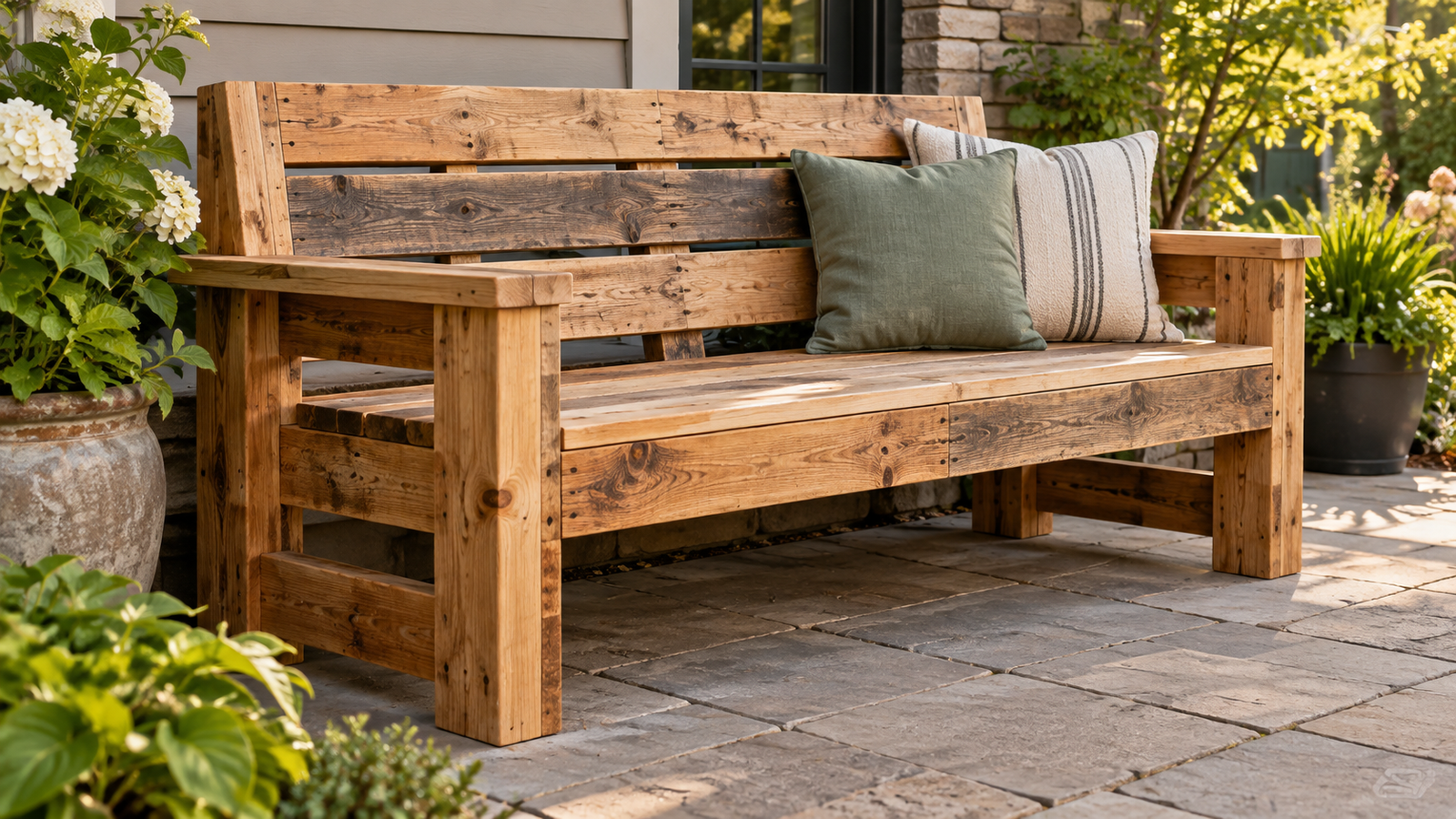
A planter stand, side table and bench have different load demands. Plan dimensions, supports, fasteners and drainage for the intended use. Outdoor seating must resist wobble and have smooth edges; a decorative example online is not a load test. Seek qualified advice when strength or joinery is uncertain.
Protect and maintain it
Choose a finish and hardware suitable for outdoor exposure, following their application instructions. Keep wood from sitting in standing water where possible, inspect joints and surfaces, and repair damage before the piece becomes unsafe. Store cushions appropriately. Reuse is valuable when the resulting piece remains useful.
Compare the real cost
Account for tools, fasteners, finish, replacement boards and your time. A free pallet does not make the finished project free. If a durable used bench already fits the patio, cleaning or repairing it may be a simpler reuse option. Do not buy a pallet kit or product solely because it is described as eco-friendly.
Further reading
U.S. EPA on reducing and reusing waste, U.S. FTC on environmental claims.