Reclaimed wood can give a piece a second use, but old boards are not automatically safe or suitable for furniture. A successful project begins with the wood's condition, the load the piece will carry, and the tools and skill available. Build for a durable use rather than for a rustic appearance alone.
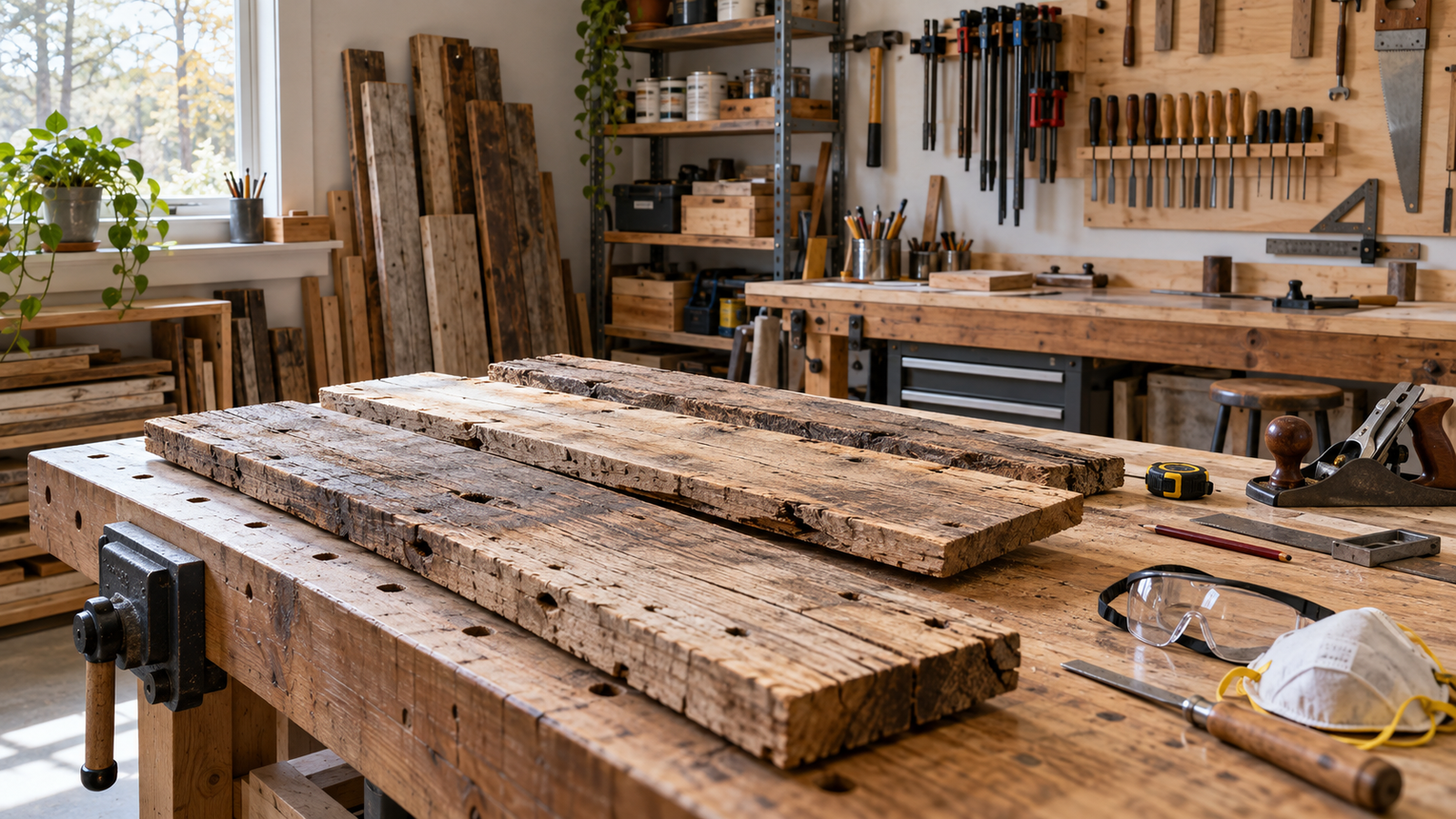
Inspect the material
Look for rot, cracks, warping, embedded fasteners, insect damage, and unknown coatings. Wood from an uncertain industrial or treated source should not be assumed safe for indoor furniture. Old paint may pose a lead hazard; do not sand or cut a suspect coating without appropriate assessment and controls. Remove metal carefully before machining.
Design for the load
Sketch dimensions and the intended use. A decorative shelf and a seat need very different strength and stability. Choose joinery, fasteners, and support appropriate to the material and load. Follow tool and hardware instructions. Ask an experienced woodworker or qualified professional when structural performance is uncertain.
A tall cabinet or shelving unit also needs tip-over prevention in the home. Follow manufacturer guidance for proper anchoring and check the wall type. Do not use a photo of a finished piece as proof that a build is safe.
Finish for the location
Clean and prepare wood in a ventilated work area using suitable protective equipment. Select a finish intended for the surface's actual use, especially where moisture or frequent cleaning is expected. Follow curing and ventilation instructions. Keep offcuts for smaller repairs if sound and appropriate.
Buy selectively
Measure the available stock before ordering hardware, tools or a finish. Reuse suitable components where possible and compare product specifications for compatibility. A recovered board is a starting material, not an environmental certification or a claim that the final piece has a known carbon footprint.
Further reading
U.S. EPA on reuse and repair, U.S. CPSC on furniture anchoring, U.S. EPA on lead-safe renovation.