You do not need a large yard to grow a few edible plants. A balcony, patio, or sunny corner may support a small container garden when the plants match the available light and climate. Start with a manageable number of containers, observe how they perform, and expand from what you learn.
Measure your growing space
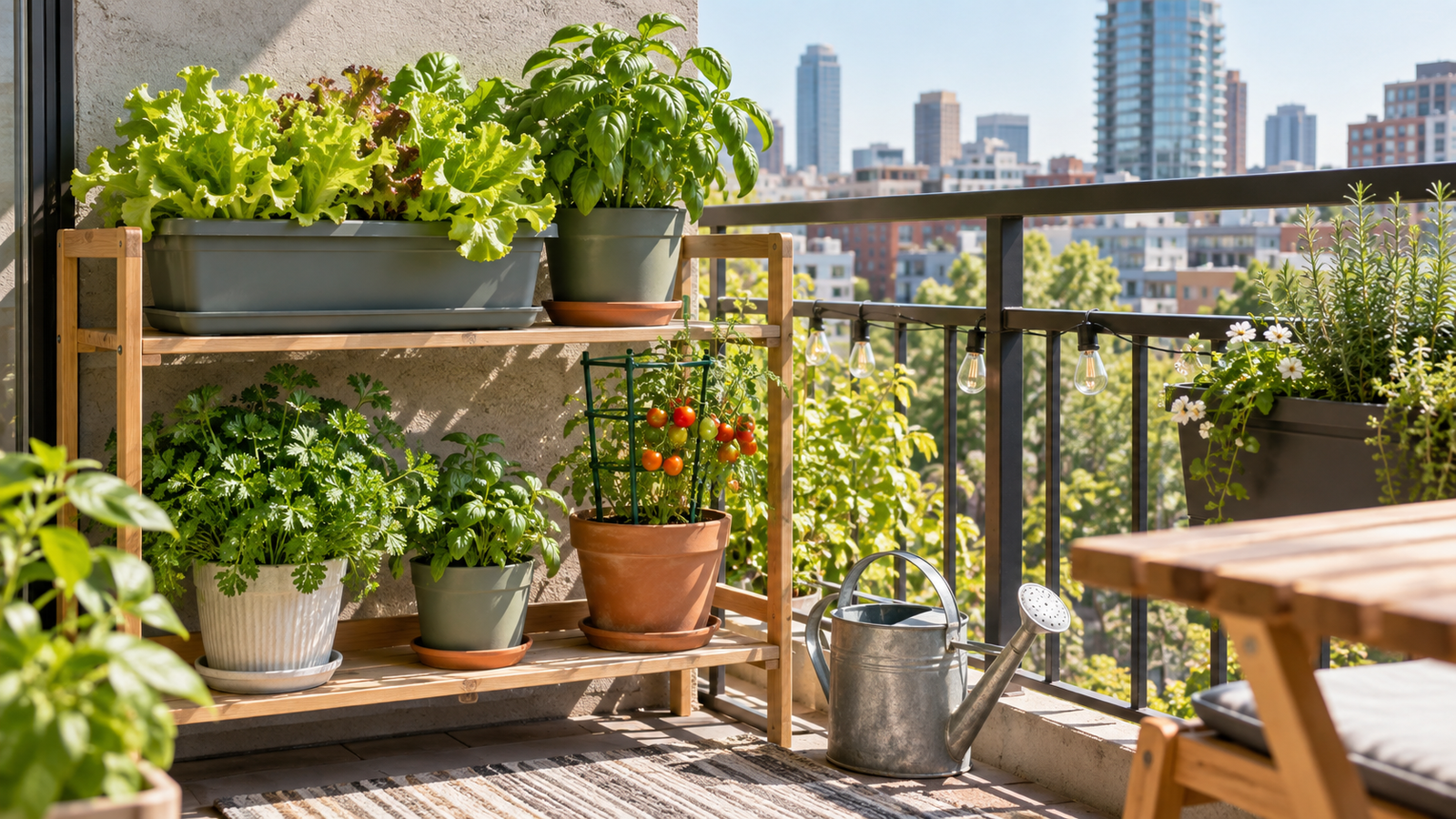
Watch the space across the day before selecting crops. Note direct sun, shade, wind, access to water, and seasonal temperature changes. Check building or landlord rules before putting containers on a balcony, and account for the weight of wet potting mix. Choose plants suited to the actual light conditions and your local growing season; a bright window is not automatically enough for every vegetable.
Choose containers and a growing mix
Containers need drainage holes and enough space for the roots of the crop you choose. Use an appropriate container potting mix rather than compacted garden soil. Plan where runoff will go so watering does not damage a floor or a neighbor’s space. Container soil can dry out faster than a garden bed, especially in heat or wind, so check its moisture rather than following a fixed calendar.
Start with plants you will use
Herbs can be a small first project when they receive the light they need. Leafy greens or compact varieties of vegetables may fit some containers, but each crop has its own spacing, depth, light, and temperature needs. Read the seed packet or plant label and consult a local university extension guide for planting dates. A tomato, for example, may need a larger container and a suitable support than a small herb pot.
Build a simple maintenance routine
- Check moisture at the root zone and water when the plant and mix need it, allowing excess water to drain.
- Inspect leaves for pests or stress and identify the cause before applying a treatment.
- Feed container plants according to crop and product guidance; watering can wash nutrients through the mix.
- Give growing plants enough space and add supports before stems become difficult to handle.
Where products fit
A practical starter list is a few correctly sized containers, potting mix, seeds or seedlings, and a watering tool. Add a trellis only for a crop that needs support. A drip system or grow light can solve a real maintenance or lighting problem, but it should not be the default purchase for every small garden.
A small harvest is valuable as a learning project and a source of fresh ingredients. Avoid assuming it will make a household self-sufficient or save a fixed amount of grocery money. Results depend on the crop, season, care, and growing conditions.
Further reading
See the University of Minnesota Extension guide to small-space containers and its herb-growing guidance. Consult an extension service in your state for local planting dates.