Plant pots can add color and texture to a home, but a sustainable choice starts with the plant and a container that will last. Reusing a pot you already own can be useful; a new product described as recycled or natural still needs to work for its location and watering routine.
Start with a healthy container
Check the plant's mature root size and the pot's drainage. Many plants need excess water to escape, while a decorative outer cachepot can hide a nursery pot and collect drips. Empty standing water so roots do not remain saturated. Outdoors, consider weight, sun exposure, freeze-thaw conditions, and how the pot can be moved.
A reused ceramic, terracotta, or plastic pot should be cleaned before a new planting. If a container lacks drainage, use it as an outer cover or choose a plant and watering method appropriate to that limitation. Do not make a hole in brittle material without suitable tools and safe instructions.
Evaluate material claims
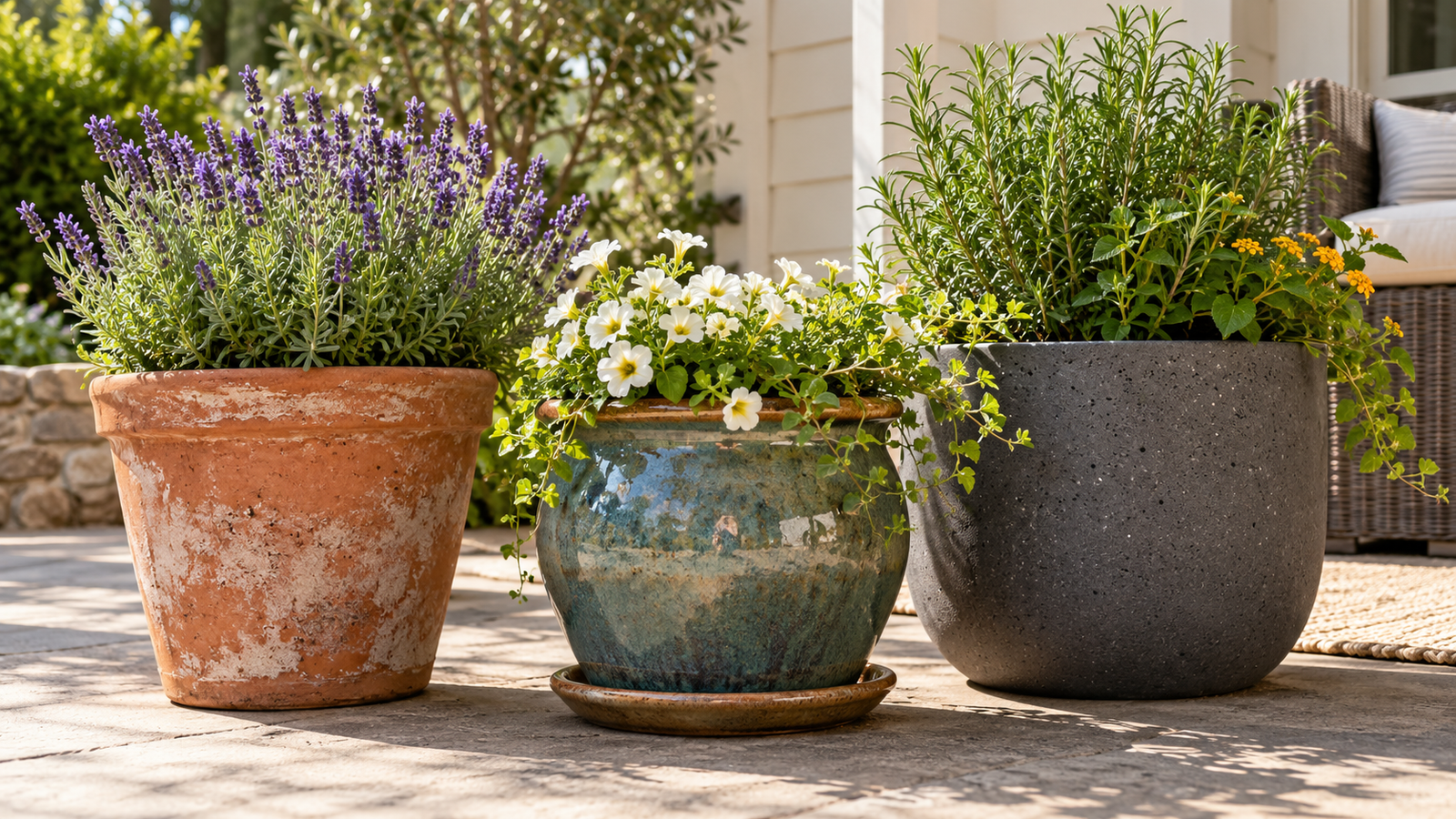
Terracotta is porous and may dry faster; some plastic pots retain moisture longer and are lightweight. Material alone does not tell you a pot's total environmental impact. Look for documented recycled content if that matters to you, but also consider expected life, replaceable parts, transport, and whether the pot can be reused again.
A sturdy secondhand pot that serves for years may be a better fit than a fragile decorative item. Avoid calling a planter eco-friendly solely because it is brown, bamboo-colored, or labeled natural.
Create a useful arrangement
Group pots with plants that have compatible light and watering needs, while leaving space to reach each one. Use saucers or trays to protect a shelf and check for overflow. A single larger plant can anchor a corner; smaller containers can sit where they receive the light they actually need. Keep heavy pots on stable surfaces.
Before purchasing, measure the available area, choose the plant, and check the pot's interior dimensions, drainage, and outdoor rating. These criteria are more useful than an unverified brand ranking.
Further reading
University of Minnesota Extension container gardening, University of Minnesota Extension on watering containers.