Indoor plants can make a room feel inviting, but a few pots should not be presented as an air-cleaning system. Laboratory experiments on pollutants do not demonstrate that ordinary numbers of houseplants meaningfully clean the air in a lived-in home. The U.S. Environmental Protection Agency emphasizes controlling pollution sources and providing adequate ventilation.
Choose plants that suit the room
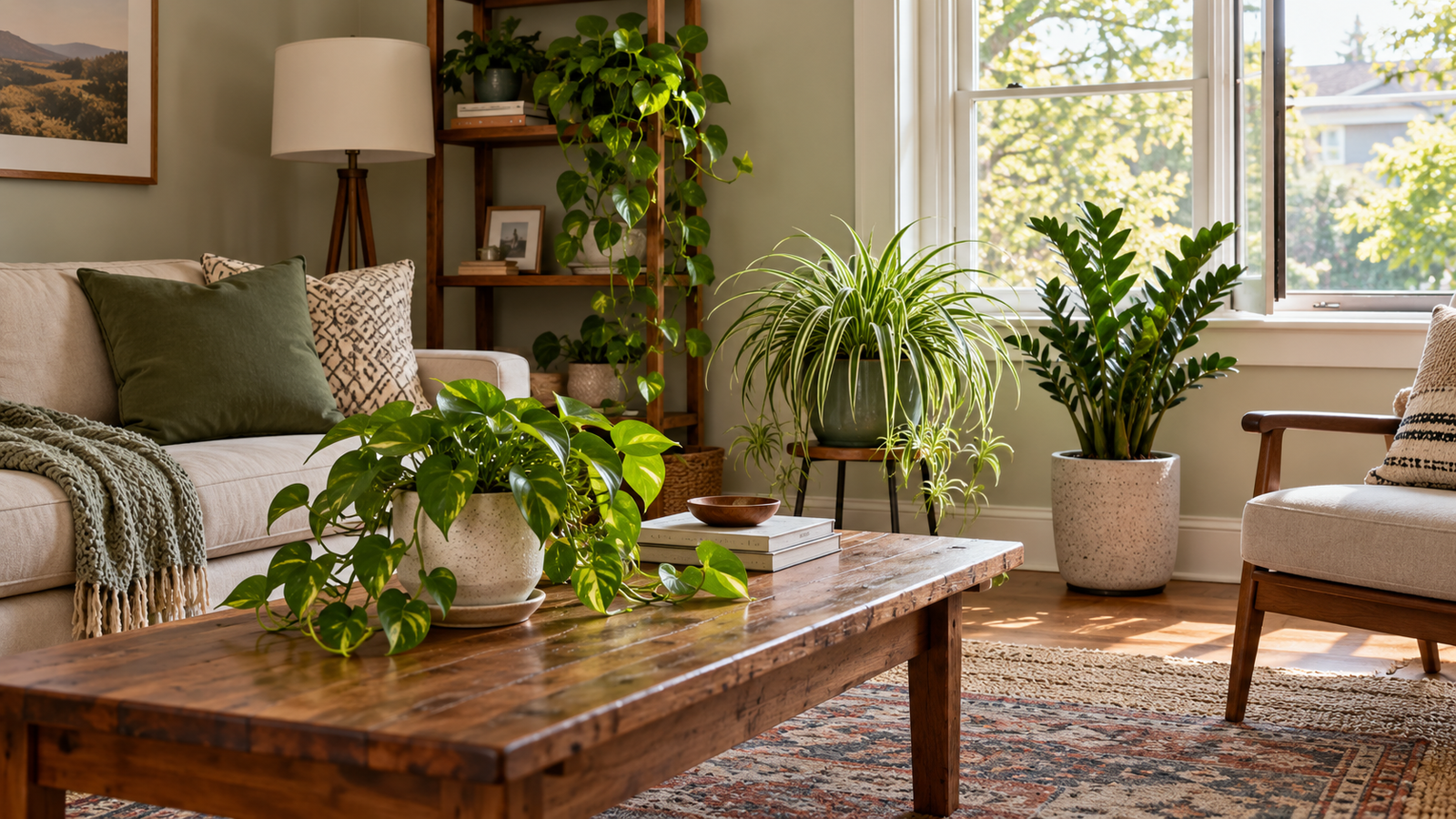
Observe the light and temperature where the plant will live. A window with bright indirect light differs from a dim hallway or a hot south-facing sill. Check a species' care guide and mature size before buying. The pictured arrangement is decorative; it is not a measured air-quality intervention.
Pothos, spider plants, and other common foliage plants have different light, water, and pet-safety considerations. Check reliable plant-specific guidance and household pet information rather than assuming every indoor plant is safe in every home.
Keep pots and soil in good condition
Use a container with appropriate drainage and a potting mix suited to the plant. Feel the growing medium and follow species-specific advice instead of watering every pot on one fixed schedule. Empty standing water, remove dead leaves, and inspect for pests. Excessive moisture can create its own indoor problems.
Address indoor air at its source
If a room has odors, smoke, dampness, or suspected pollutants, identify the source. Ventilate appropriately and maintain the home's systems. A suitable air cleaner or filter may be useful as a supplement for a defined concern, but the equipment and conditions need to be assessed. Do not buy plants as a replacement for remediation, ventilation, or filtration.
For decor, compare a healthy plant from a suitable nursery, a durable planter, and the time you can devote to care. Avoid affiliate claims that a species removes a stated amount of toxins from a home without real-world evidence.
Further reading
U.S. EPA on indoor air pollution and houseplants, U.S. EPA on improving indoor air quality.