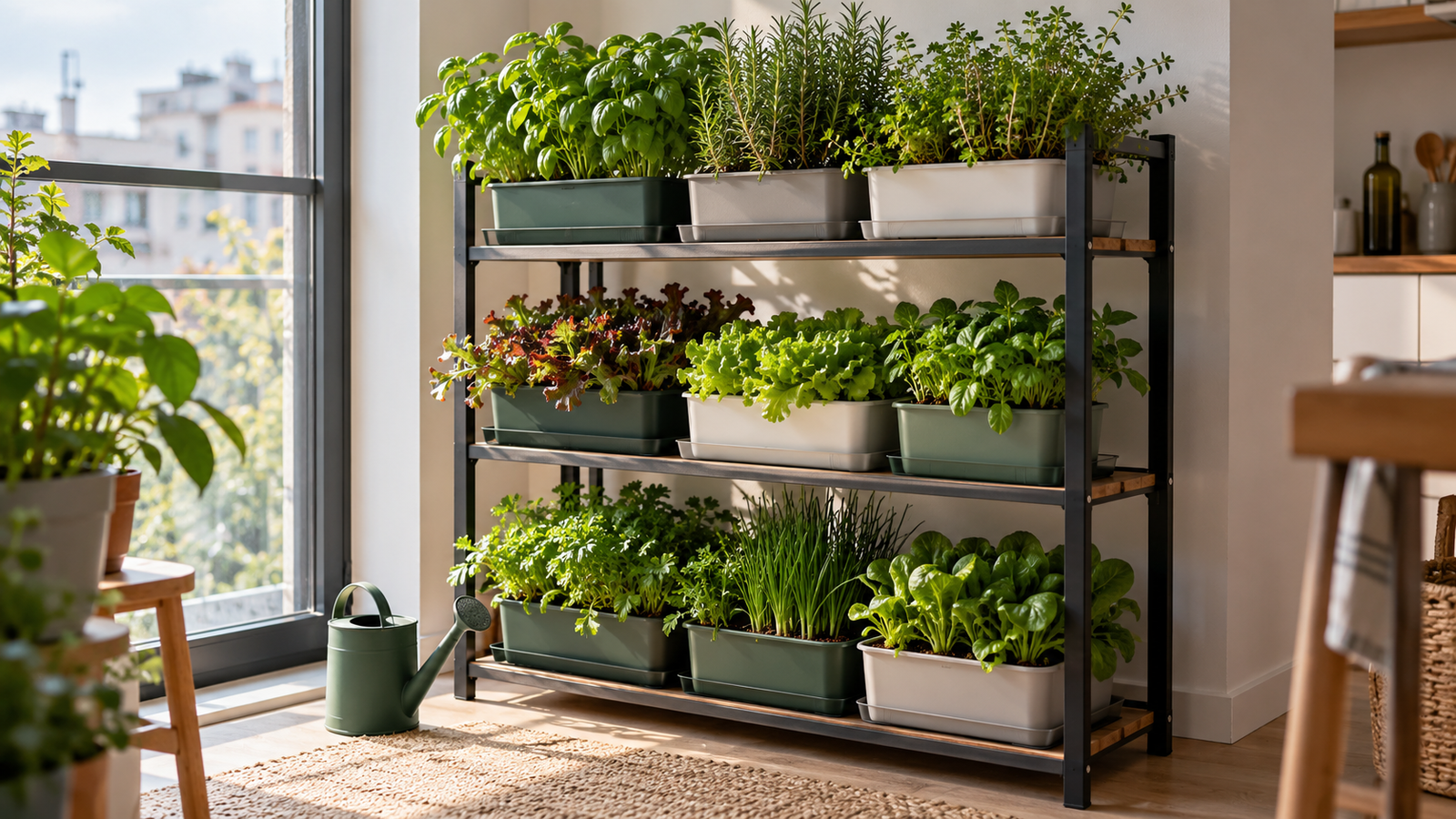
An indoor vertical garden saves floor space, but stacked containers need regular attention. The upper shelf may receive more light and dry faster than the lower shelf. A manageable design gives you access to every plant and keeps water away from the wall and floor.
Check light at each level
Observe the garden through the day. A bright window may reach the top row while the lower rows remain shaded. Choose plants according to the light they actually receive and move containers when a plant stretches or struggles. Supplemental lighting can be considered if natural light is inadequate, but choose it for the plant and setup rather than treating any decorative LED as a grow light.
Water without soaking the room
Use containers with drainage and trays that can be emptied. Check the growing medium and plant needs before watering; a single timer cannot know whether every pot is dry. Protect the floor and wall, and inspect for drips after watering. Do not let trays hold stagnant water for long periods.
The weight of wet potting mix and mature plants matters. Check a rack's rated capacity and stability, especially when moving or rearranging it. Follow the mounting instructions for a wall-supported system.
Make weekly care simple
Remove dead growth, inspect leaves for pests, rotate or relocate plants as needed, and check for blocked drainage. Trim herbs according to species guidance so they remain accessible. If one plant has different water needs, group it with more suitable neighbors or keep it in a separate container.
A useful maintenance kit may include a narrow-spout watering can, reachable trays, suitable potting mix, and a sturdy rack. Compare dimensions and ratings before purchase; no kit is universally right for every wall or window.
Further reading
University of Minnesota Extension lighting for indoor plants, University of Minnesota Extension watering container plants.