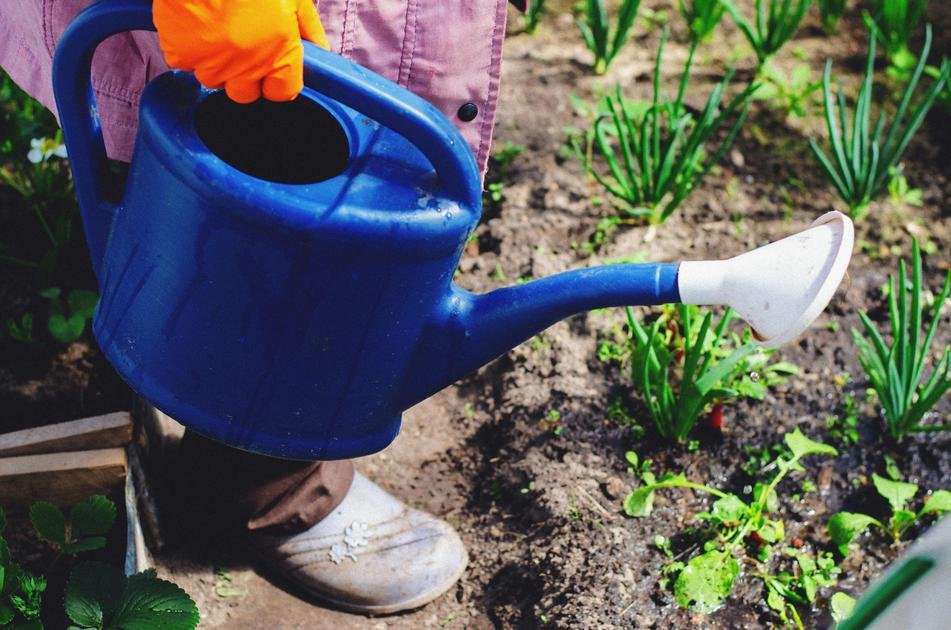
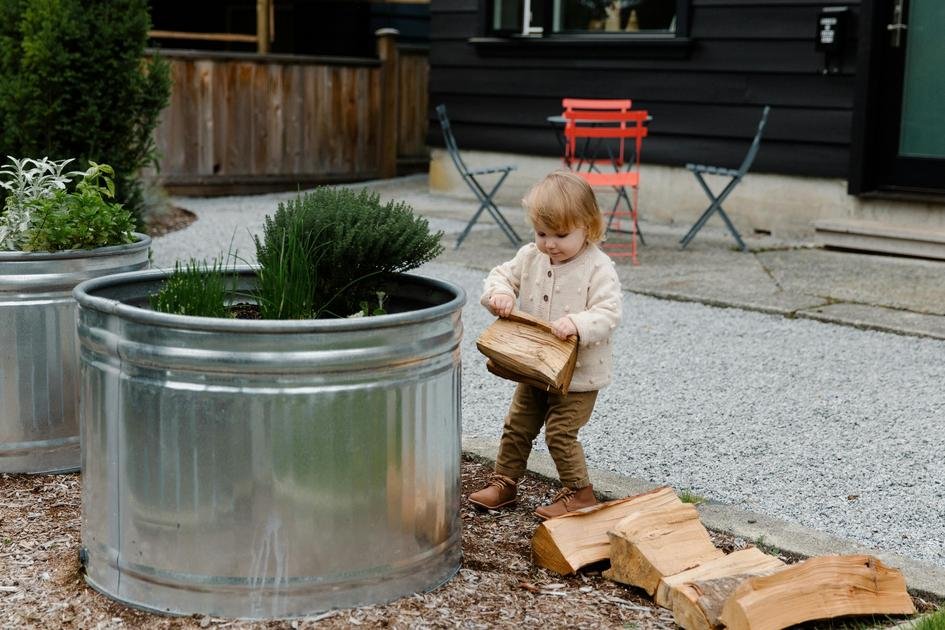
A balcony can hold a small edible garden when plants match its sunlight and the structure can safely support the load. Start with a few reachable containers rather than a tall installation that blocks a walkway or drops water onto a neighbor.
Check the balcony before planting
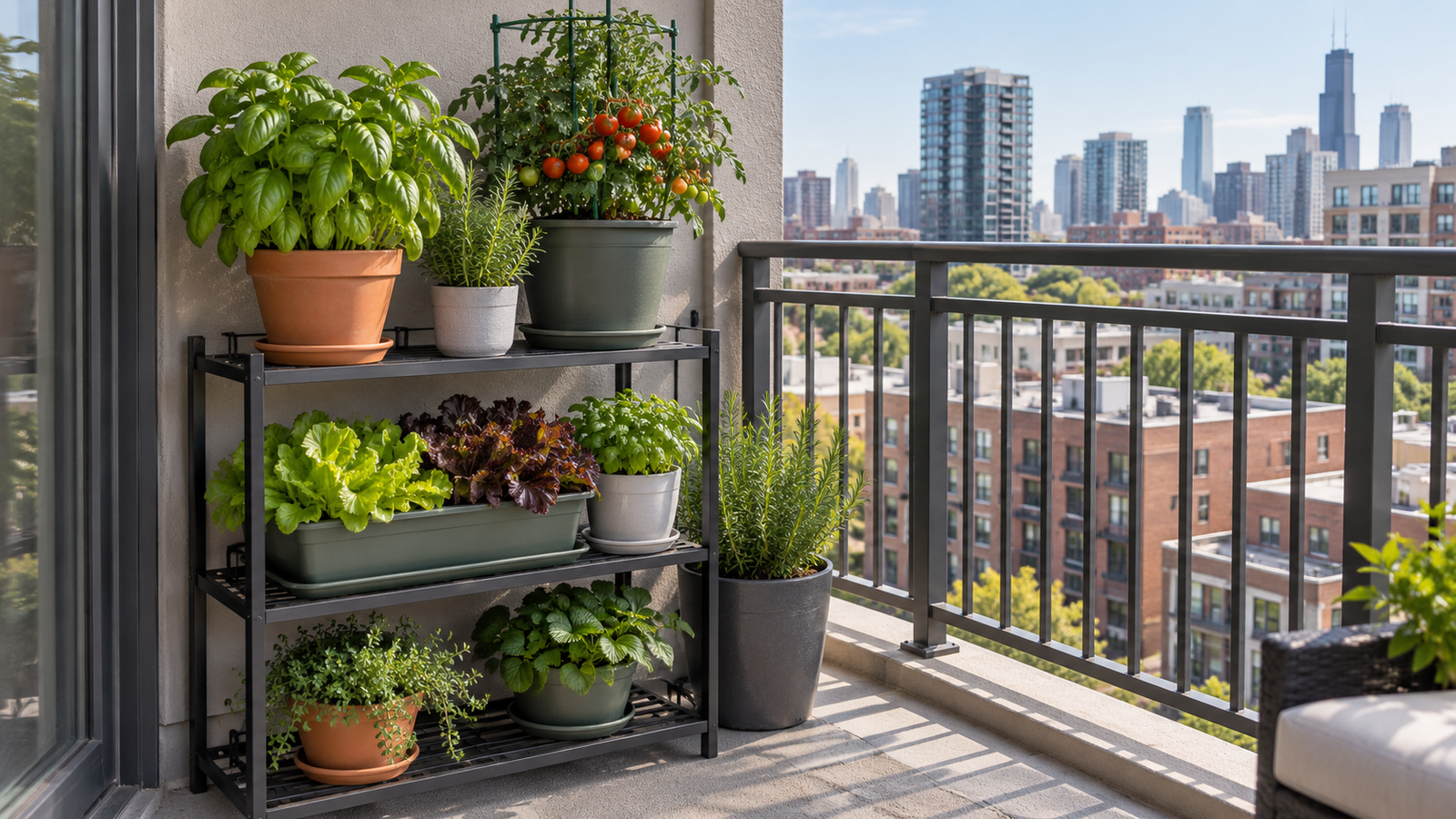
Observe direct sun across the day, wind, seasonal temperatures, and access to water. Confirm building and landlord rules, railing restrictions, and any load limits. Wet potting mix, large containers, and a full watering can add weight. A freestanding rack keeps a project reversible where drilling is not permitted, but it must remain stable.
Choose crops for the available light
Leafy greens and herbs can be reasonable small-container candidates when conditions suit them. Tomatoes and other fruiting crops generally demand more sun, root space, and support. Follow seed or plant labels and local extension guidance for your growing season. Avoid promising a harvest from a shaded balcony based only on an attractive photograph.
Build a practical layout
Keep taller plants from shading lower shelves and make every pot reachable. Use containers with drainage and suitable potting mix, with trays that can be emptied. Do not attach heavy boxes to a railing without the building's approval and hardware designed for the load. Leave doors, exits, and walking space clear.
Check moisture and plant growth regularly. Hot, windy balconies may dry quickly; sheltered balconies behave differently. If adding a drip kit or timer, inspect for leaks and continue checking the plants. Buy a rack, containers and soil only after measuring the space and choosing crops.
Further reading
University of Minnesota Extension container gardening, University of Minnesota Extension container watering.