A balcony garden can look wonderful in calm weather and become a problem during the first heavy downpour. Saturated potting mix adds weight, blocked drainage stresses roots, and tall plants can act like sails in strong wind. A rain-ready design prevents those problems before the forecast turns.
The goal is not to keep every drop away. It is to guide excess water safely, choose stable containers, and create a layout that can be inspected quickly before and after a storm.
Begin with the balcony, not the plant list
Check building or rental rules before installing railing planters, screens, trellises, or hooks. Confirm the balcony’s drainage route and keep door thresholds, floor drains, and emergency access clear. If you are unsure about weight limits, ask the property manager or a qualified professional rather than guessing.
Remember that wet potting mix, water-filled saucers, ceramic containers, and mature plants weigh much more than empty pots. Spread the garden across the available space instead of concentrating every heavy container in one corner.
Give every container a clear drainage path
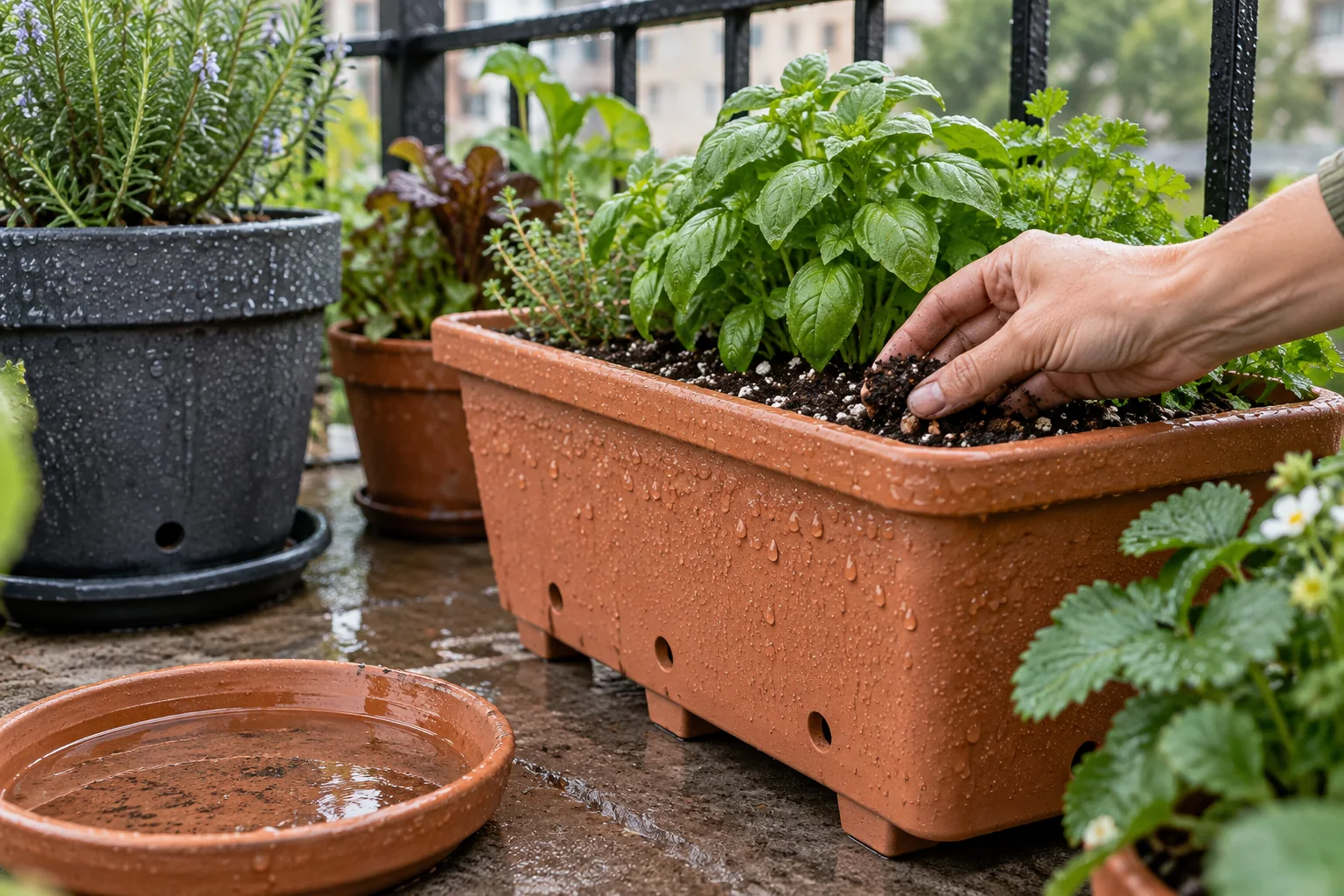
Each pot needs unobstructed drainage holes. Raise containers slightly on pot feet so water can escape and air can reach the bottom. Use a good-quality potting mix rather than dense garden soil, which can compact in containers and hold too much water.
Saucers protect the surface below and can be considerate when another balcony sits underneath, but they must be emptied after rain. Standing water can keep roots saturated and create a place for mosquitoes to breed. Do not rely on a layer of gravel to fix poor drainage; the container itself needs a functional outlet.
Choose containers that balance weight and stability
Lightweight planters are easier to move, but tall plants in very light pots can tip in wind. Wider containers with a low center of gravity are safer for exposed locations. A lightweight pot can be placed inside a stable outer planter, provided water can still drain and the total weight remains appropriate.
Avoid placing loose pots on ledges or narrow railing tops. Use only railing planters and brackets designed for the exact location and install them according to the manufacturer’s directions. Nothing should be able to fall onto people or property below.
Match plants to the real exposure
Observe the balcony through a normal week. Note direct sun, reflected heat, wind tunnels between buildings, and areas sheltered by an overhang. Compact plants with flexible stems usually tolerate exposed sites better than top-heavy specimens with broad leaves.
Group plants with similar moisture needs so the wettest pot does not dictate care for the entire garden. Leave space between foliage for airflow, and avoid packing plants so tightly that leaves stay wet for days.
Support plants without damaging the building
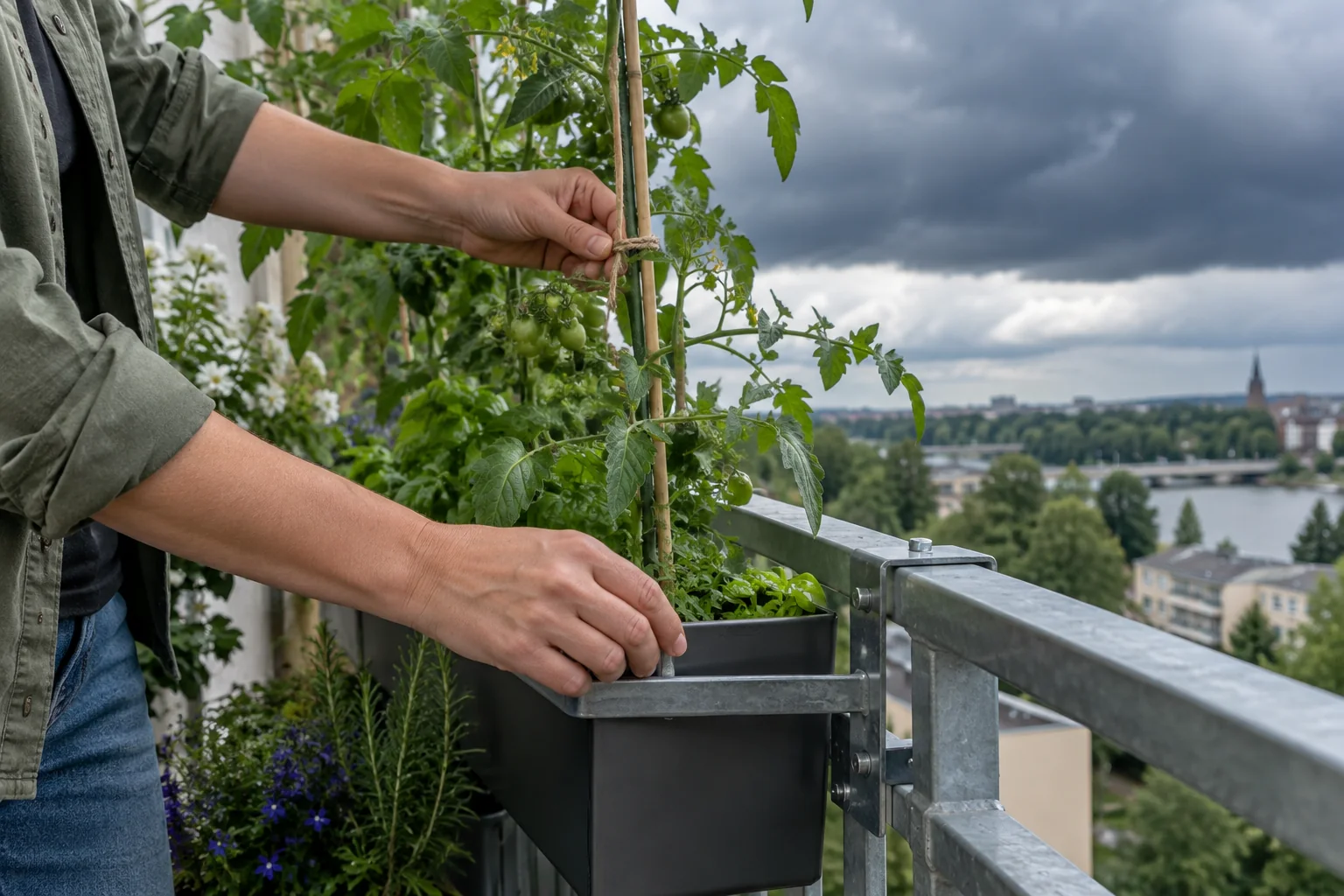
Secure tall plants to supports inside their containers. Soft plant ties should hold stems without cutting into them, and stakes should be anchored deeply enough to resist movement. Inspect trellises and brackets regularly for corrosion, loose fasteners, or stretched ties.
Do not attach hardware to railings, walls, waterproofing membranes, or drainage components unless the building rules allow it and the method is suitable for the structure.
Use a simple pre-storm routine
- Move small and lightweight pots to a sheltered floor-level position.
- Remove hanging objects and unsecured tools.
- Check that drainage holes, floor drains, and overflow paths are open.
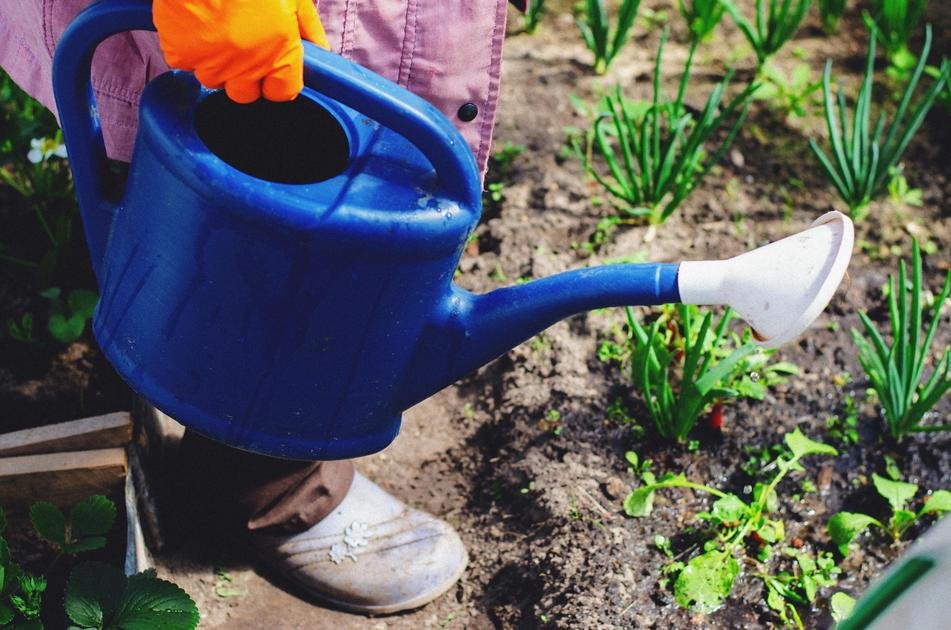
- Empty watering cans and saucers that could add unnecessary weight.
- Secure flexible stems and inspect brackets without leaning over the railing.
- Close or fold shade fabric if it is not rated for strong wind.
Never work outside during lightning or dangerous wind. Prepare early enough that the final check can be completed safely.
Inspect before watering again
After heavy rain, check moisture below the surface instead of watering on schedule. Empty saucers, clear fallen leaves from drains, and look for leaning plants, exposed roots, cracked pots, or loose supports. Trim damaged growth with clean tools and allow saturated mix to drain before adding fertilizer.
A resilient balcony garden is built through small, repeatable checks. When drainage, weight, and anchoring are planned together, the space can recover quickly and remain enjoyable throughout changing weather.
Related practical guides
- How to Build a Vertical Garden in a Small Space
- Vertical Vegetable Garden Ideas for an Apartment Balcony
Further reading
The University of Maryland Extension offers detailed guidance on container selection, drainage, balance, and watering.